
Shark Week lasts just seven days but the lessons we can take from sharks last much longer.
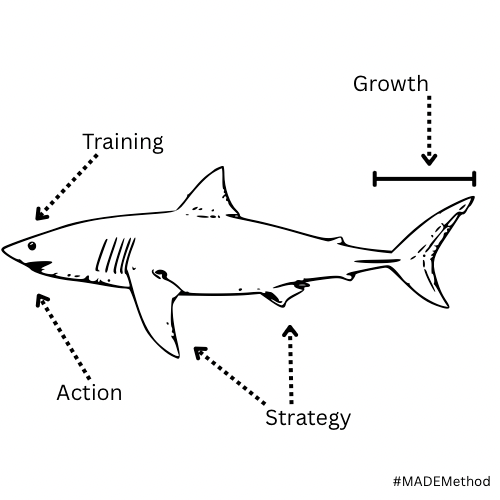
Last week, I explored Jaws and what it teaches us about strategy and systems. This week, we’re diving deeper (pun 100% intended) into how sharks themselves can shape our thinking around growth, leadership, and resilience. Whether you’re onboarding a new team member or designing systems that need to adapt and evolve, these predators have something to teach us.
🌀 Nature as a Blueprint
Before I entered the world of education and consulting, I dreamed of being a zoologist. I still study nature like it’s my job, because sometimes it is! Biomimicry isn’t just about copying nature’s design; it’s about understanding the why behind evolution and applying it to our own systems.
Here are three shark-inspired lessons you can apply in your work:
🦈 1. The Bull Shark Blueprint: Don’t Rush Development
Bull sharks spend their early life in safe estuaries or nurseries where they grow stronger before braving open waters. The same is true for people. New team members need onboarding time to learn, explore, and hunt for low-stakes wins. Give them space to stumble, play, and grow before expecting peak performance.
(Also, yes, I have “Baby Shark” stuck in my head. Life imitates art… or newborns, lol.)
🧠 2. Training = Thermoregulation
Juvenile sharks develop internal temperature control over time. Without it, they can’t survive. People need to develop their own internal “regulation” too like building their confidence, decision-making, and resilience. That’s what great training provides them, opportunities to test the waters and develop their natural skills and abilities.
🎯 3. Opportunistic Strategy: Hunt Smart, Not Hard and Surface Distraction vs Exploring the Depths
Sharks often fail to catch prey, but in doing so they learn to go after what’s easiest and most energy-efficient. An injured seal? Easier than a healthy one. A confused turtle? Jackpot. Sometimes, we should do the same: choose smart, strategic actions over the relentless hustle. But other times, we should explore the depths. Sharks often explore easy things at the surface like boats, people, turtles but that can leave them confused and hungry. Likewise, we often get distracted by surface-level ideas. The best solutions? They require depth, curiosity, and quiet observation.
🌱 Final Thought
Sharks don’t just survive, they evolve, adapt, and thrive. Sharks have been around for over 400 million years! That’s older than dinosaurs!! If we study them closely, we can learn their ancient wisdom. They’ve put in the time, research, and development of these ideas and now we can take them, adapt them, and put them into action.
🗣 Questions for You:
- What’s your favorite shark fact or story, and how has it inspired you?
- How do you build “nursery spaces” for growth on your team or in your life?
Surfs up,
Jenn Babcock
Founder, MADE Consulting
Mission-Aligned Design Excellence

 MADE consulting